Columbia's Best Bat Removal
We've been voted Columbia's best bat removal company the past two years!
Get in touch
Bat Experts
Rapid Response
Trained & Educated
Licensed & Certified
About Columbia Bat Removal
Welcome to columbiabatremoval.com. We are the only qualified bat removal company in Columbia, South Carolina. Looking after our environment and surroundings is very important, especially when we live in such a beautiful country, and helping species to survive so they are still here for generations to come is an important goal. Of course, as an experienced animal removal company we know that having bats in your attic or loft space is a concern, but our passion for the environment has allowed us to team up with a local tradesman who can provide bat boxes. These give the bats that are present in your home a natural roosting spot that they can move into once they have been excluded from your property. We are proud to be able to offer this option to our customers as part of our service, so that we can help to support bat populations as well as get them out of your home. When it comes to removing the bats, you can be confident that our experienced team has the right equipment and knowledge to get the job done. We have technicians on call that are usually with you within 24 hours, and they will carry out a detailed examination of the property. They will then use exclusion netting along with repairing most of the holes the bats will be using to get in and out, with the exclusion netting being designed to prevent the bats from getting back in. Over the course of a couple of days, all of the bats should have left the property, and then our technician can also help with all of the repairs and cleaning work as well. We operate 24-7-365, so don't hesitate to call us at 803-393-4383 to discuss your bat problem and schedule a fast appointment.
Residential
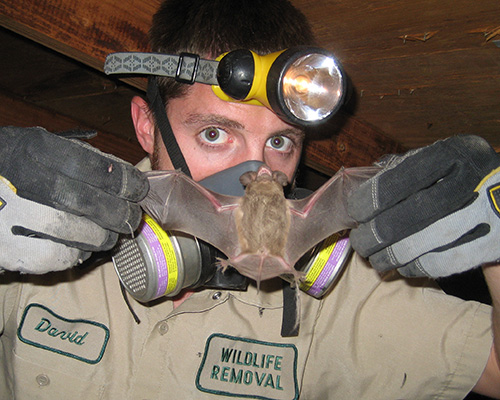
We are experts at removing bats from residential properties. Whether you have a single bat trapped in your house, a colony roosting in your attic, and/or various other problems, there is no need to worry! During our removal process, we make sure to inspect your entire home carefully, tracking down all the entrypoints bats are using to invade your place. Next, we perform a process called live exclusion (where no bats are harmed and all exit your property), then seal all entry holes completely shut. We also take care of the cleanup process after, so your home is safe and clean!
Learn MoreCommercial
Besides residential areas, we also have a wealth of experience removing bats from commercial properties! We begin by investigating the area for possible bat entrances, covering holes even as small as 1/4 of an inch. Through our live exclusion process, bats leave the building through one-way exits, and we seal up every hole afterward. Once the bats have been removed, we perform a cleanup process. This includes dealing with guano, replacing damaged insulation, and decontaminating the place.
Learn More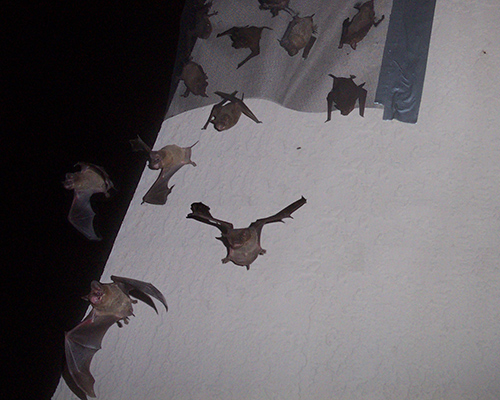
Contact us for bat removal today!
What Our Customers Say
I had a bat flying around in my house at 9pm, and CITY bat removal came right out and caught it in a net.
Sarah Lakewood
I had an annoying colony of bats stuck in my attic for a while before I finally decided to call for help. They were able to quickly and thoroughly solve the problem!
Brandon Chung
They did a great job clearing my attic of bats and didn't hurt any of the creatures.
Charlotte Demers
The technicians at CITY Bat Removal are skilled, professional, and know exactly what they're doing. Would highly recommend.
Mark O'Connor
My house stank of bats and their guano inside my wall. CITY Bat Removal not only removed the bats, they also got rid of the smell!
Alexis Ramirez
.jpg)
Is It Against the Law to Kill a Bat?
It is illegal to kill a bat. There is no safe poison, kill trap, or weapon that makes it legal. The US has federal laws protecting bats for their impact on the ecosystem and contribution to the environment. Bats are generally misunderstood creatures, although there are many scientific studies being conducted to reduce the mystery shrouding these flying mammals.
How Bats Impact the World
Bats are invaluable to the ecosystem of any areas they roost in. In the US, they help control the insect population and eat several thousand pest-species of insects that can impact the crops produced by farmers and others that can impact the health of livestock.
In tropical regions where fruit bats are prevalent, they pollinate the flowers. Pollen gets stuck on their fur and faces while they drink nectar and by moving from flower to flower the pollen transfers onto the other flowers.
No matter the species of bat, their droppings are rich in nutrients and act as a fertilizer for all manner of plants and trees. This can be a draw for their insect food source as well.
Relatively Harmless
Although bats can carry any number of minor infections and diseases, they are relatively harmless toward humans. They do not have any venom. With such small teeth, they are not able to do much damage. Their nature makes them timid, and they would rather escape than interact with something they view as dangerous. Even the way they flap their wings around humans is only a method of attempting to scare us off instead of attacking us. Healthy bats will always choose to escape rather than confront a potentially deadly situation. They are rather vulnerable.
Abnormal and Sick Bats
Sick bats, however, will react abnormally. If handled at all, a sick bat is far more likely to bite or attack without apparent cause. It is important to note that bats can carry the deadly virus rabies and have the potential to transfer it to humans. This is rarer than dying from leprosy or the plague, but there are a handful of cases of bat rabies infecting humans.
If you are suspicious of a bat that has shown abnormal behaviors and think it may have rabies, do not approach it yourself. Call an expert to determine how best to handle the situation. If you absolutely must interact with it, protect yourself with thick gloves and cover any exposed skin. Trap the bat in a container with air holes and reach out to a professional to handle it from there.
A Protected Species
Bats are protected by federal law. Habitats are also protected. Some states and counties add additional regulations regarding bats and their habitats. Be sure to check in with your local wildlife department to ensure you are following proper procedures. No one wants to get in any sort of legal trouble while trying to deal with these flying mammals.
Bats' Vulnerability
One of the problems is how vulnerable bats really are. If they wake up too early from hibernation or are disturbed and then wake up, they can starve or freeze to death.
One of the biggest issues currently that is harming the bat population in the northern states is white-nose syndrome. This is a type of fungus that grows on bat noses, wings, and other body parts. It is relatively harmless for humans. The fungus causes the bats to wake up sooner than they would have otherwise during torpor. Once awake from their low-energy state, they burn through more energy than they have fat stores to support. This will result in the need to hunt. In wintertime, their food sources are either dead or hibernating for the season as well. It means these bats starve or freeze to death.
Death at Home
Bats are fickle things sometimes and very stubborn the next. If you happen to seal up your home before checking there are any bats inside, you could cause death. That can bring on its own set of problems that can be worse than having living bats roosting in your home. The odor could attract scavengers into your home or damage the structure of it. Wood deteriorates with the natural bacteria of dead bodies of animals along with the guano and urine deposits from the roosting. Frequently, it is better to call a professional to see what you are dealing with.